Packing Tips for Moving: Protect Your Belongings and Stay Organized

Amid towers of empty boxes and rolls of bubble wrap, you face one of moving’s greatest challenges: packing your entire life efficiently while protecting everything you own.

Proper packing makes the difference between arriving with intact belongings neatly organized for easy unpacking, or spending weeks sorting through chaotic boxes filled with broken items. This guide provides professional packing tips for moving that protect your belongings, maintain organization, and make unpacking infinitely easier.

Packing Tips for Moving

Why Packing Strategy Matters

The Cost of Poor Packing:

  • Broken belongings from inadequate protection
  • Damaged furniture from lack of wrapping
  • Wasted time searching through unlabeled boxes
  • Additional expenses replacing broken items
  • Unnecessary stress during unpacking

The Benefits of Strategic Packing:

  • Everything arrives intact and undamaged
  • Knowing exactly where items are
  • Smooth loading and unloading
  • Quick unpacking and settling in
  • Peace of mind throughout your move

An extra hour of careful packing saves ten hours of frustration later.

Packing Timeline

6-8 Weeks Before:

  • Collect packing supplies
  • Pack seasonal items and storage
  • Pack rarely-used items

4 Weeks Before:

  • Pack most kitchen (keep essentials)
  • Pack bedroom extras
  • Pack office supplies
  • Pack bathroom extras

2 Weeks Before:

  • Pack most remaining items
  • Keep only daily essentials
  • Prepare moving day box

Moving Week:

  • Pack final daily items
  • Pack last kitchen/bathroom essentials

Never Pack (Carry Separately):

  • Important documents
  • Valuables and jewelry
  • Medications
  • Keys and chargers
  • Moving day essentials

Essential Packing Supplies

Boxes:

  • Small (1.5 cu ft): Books, heavy items (30-40 lbs max)
  • Medium (3 cu ft): Most household items (40-50 lbs max)
  • Large (4.5 cu ft): Linens, pillows, lightweight items
  • Specialty: Wardrobe, dish pack, picture boxes

Estimate: 5-10 boxes per room; more for kitchens.

Protection Materials:

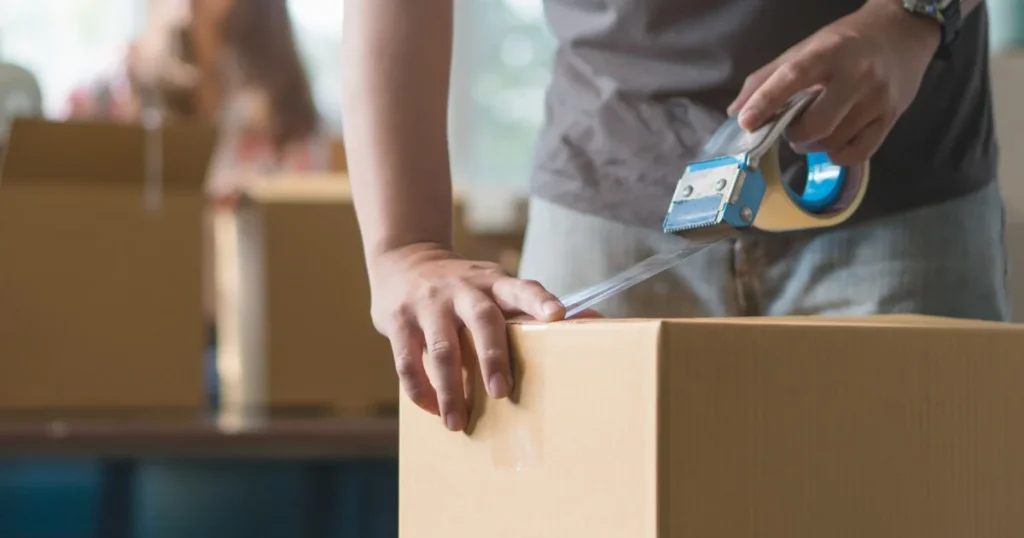
  • Packing tape (heavy-duty, 2-3″ wide)
  • Bubble wrap for fragile items
  • Packing paper or newsprint
  • Furniture pads and stretch wrap
  • Permanent markers (multiple colors)

Where to Get Supplies:

  • Buy: Home Depot, U-Haul, Amazon
  • Free: Liquor stores (sturdy boxes with dividers), grocery stores, bookstores, Facebook Marketplace

Universal Packing Principles

The Golden Rules:

  1. Heavy items in small boxes – Books, tools in small boxes only
  2. Light items in large boxes – Bedding, pillows can use large boxes
  3. Fill empty spaces – Prevent shifting with paper, towels, clothes
  4. Don’t overpack – Boxes should close naturally without bulging
  5. Reinforce bottoms – Extra tape in “H” pattern, especially for heavy items
  6. Label everything clearly – Room, contents, “FRAGILE,” priority level
  7. Pack room by room – Never mix rooms in one box
  8. Keep sets together – Don’t separate components
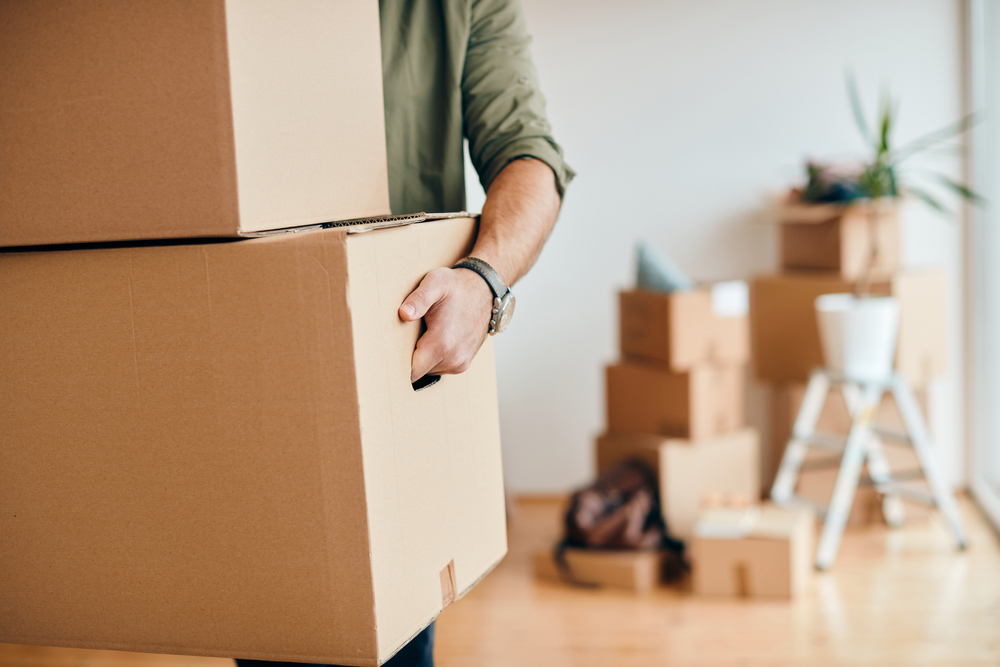
  9. Weight limit – Keep boxes under 50 pounds
  10. Make essentials box – First-night items packed separately

The Weight Test: If you can’t comfortably carry it, it’s too heavy.

The Shake Test: Gently shake packed box. If you hear items moving, add more cushioning.

Room-by-Room Packing Guide

Kitchen (Most Challenging)

Dishes and Glassware:

  • Use dish pack boxes (extra-thick walls)
  • Wrap each plate in 2-3 sheets of paper
  • Stack plates vertically (on edge) not flat
  • Stuff glass interiors with paper before wrapping
  • Place glasses upright with paper between
  • Fill all spaces completely
  • Label “FRAGILE – DISHES” on all sides

Pots, Pans, Cookware:

  • Nest by size with paper between
  • Pack lids separately or vertically
  • Fill large pots with small items
  • Wrap non-stick cookware to protect coating

Pantry Items:

  • Pack heavy items (cans) on bottom
  • Secure bottle caps with plastic wrap
  • Double-bag anything that could spill
  • Pack baking supplies together

Utensils:

  • Wrap sharp knives in cardboard
  • Bundle silverware in groups
  • Pack small utensils in containers
  • Group similar items together

Bedroom

Hanging Clothes:

  • Use wardrobe boxes (hold 2 feet of hanging clothes)
  • Transfer directly from closet to box on hangers
  • Most efficient method

Folded Clothes:

  • Leave clothes in dresser drawers, wrap drawer with plastic
  • Use suitcases and duffel bags
  • Roll clothes to save space
  • Vacuum-seal out-of-season items

Shoes:

  • Pack in original boxes if available
  • Pair shoes, stuff toes, wrap together
  • Heavy shoes on bottom

Bedding:

  • Vacuum-seal comforters and duvets
  • Use pillows/blankets as padding for fragile items
  • Pack sheets in labeled bags by bed size

Living Room

Electronics:

  • Photograph wire configurations before disconnecting
  • Pack in original boxes when possible
  • Wrap screens in anti-static bubble wrap
  • Keep remotes with devices

Books and Media:

  • Use small boxes only (books are heavy)
  • Pack spine down or lay flat
  • Fill spaces so books don’t shift

Decorations:

  • Make “X” with painter’s tape on glass/mirrors
  • Wrap in bubble wrap
  • Use picture boxes
  • Label “FRAGILE – GLASS”

Bathroom

Prevent Leaks:

  1. Remove caps from bottles
  2. Place plastic wrap over opening
  3. Screw cap back on over wrap
  4. Place bottles in plastic bags
  5. Pack upright

Organization:

  • Group by type (hair care, skincare, oral care)
  • Pack in plastic bags or containers
  • Keep medications separate and labeled
  • Transport medications personally

Special Items

Mirrors and Artwork:

  • Make “X” with painter’s tape on glass
  • Wrap in bubble wrap
  • Use mirror/picture boxes
  • Transport valuable pieces yourself

Large Appliances:

  • Clean thoroughly
  • Secure moving parts (tape washer drum)
  • Allow refrigerator to defrost 24+ hours
  • Let refrigerator sit upright 24 hours after move

Plants:

  • Many movers won’t transport
  • Prune for transport
  • Water sparingly
  • Wrap pot in plastic
  • Keep in climate-controlled vehicle

Advanced Packing Strategies

Packing Tips for Moving

Color-Coding System: Assign each room a color using colored tape/markers:

  • Kitchen: Red
  • Bedroom 1: Blue
  • Bathroom: Yellow
  • Living Room: Orange

Movers see color and know destination instantly.

Numbering System: Number boxes sequentially and track:

  • Box #1: Kitchen – pots and pans
  • Box #2: Kitchen – glasses and mugs

Allows tracking and identifies missing boxes.

Priority System: Mark boxes with unpacking priority:

  • Priority 1: Essentials, kitchen basics, bedding
  • Priority 2: Daily items, everyday dishes
  • Priority 3: Decorations, books, seasonal items

Photo Documentation: Before disassembling or packing:

  • Photograph electronics wire configurations
  • Photograph furniture you want to recreate
  • Reference photos make reassembly easier

“Load Last, Unload First”: Items needed immediately load last on truck:

  • Essentials box
  • Cleaning supplies
  • Tools for assembly
  • First-night bedding
  • Kids’ needs
  • Pet supplies

The Moving Day Essentials Box

Pack one clearly-labeled box with:

Bathroom:

  • Toilet paper, soap, towels
  • Shower essentials
  • Medications

Kitchen:

  • Paper plates, cups, utensils
  • Dish soap
  • Trash bags
  • Snacks

Tools:

  • Box cutter and scissors
  • Basic tools (screwdriver, hammer)
  • Phone chargers
  • Flashlight

Cleaning:

  • All-purpose cleaner
  • Paper towels
  • Broom

Bedding:

  • One set of sheets per bed
  • Pillows and blankets

Personal:

  • Change of clothes
  • Important documents
  • Pet food and supplies
  • Kids’ comfort items

Keep this box in your vehicle, never the moving truck.

Professional Packing vs. DIY

DIY Packing:

  • Pros: Less expensive, complete control, flexible timeline
  • Cons: Time-consuming (40-80+ hours), physically demanding, higher damage risk
  • Best For: Local moves, smaller homes, budget-conscious movers

Professional Packing:

  • Pros: Saves 40-80 hours, professional techniques, proper materials, better insurance coverage
  • Cons: Expensive ($500-3,000+), less control, must schedule in advance
  • Best For: Long-distance moves, large homes, limited time, valuable items

Hybrid Approach: Pack most yourself; hire professionals for kitchen, china, and valuables. Balances cost and protection.

When working with professional movers, quality companies provide comprehensive services using professional-grade materials. For those seeking expert help with packing tips for moving, experienced moving companies offer everything from full-service packing to customized solutions—transforming a weeks-long DIY project into efficiently executed professional service.

Common Packing Mistakes

  1. Starting too late – Rushed packing leads to damage and chaos
  2. Using inadequate boxes – Weak boxes break during handling
  3. Overpacking boxes – Boxes break, damaging contents
  4. Underpacking fragile items – Skimping on padding breaks items
  5. Poor labeling – Creates unpacking chaos
  6. Mixing rooms – Makes unpacking disorganized
  7. Not securing liquids – Unsealed bottles leak
  8. Packing heavy in large boxes – Impossible to lift safely
  9. Not protecting furniture – Unprotected surfaces get damaged
  10. Packing prohibited items – Hazardous materials can’t be moved

Final Thoughts

Packing for a move isn’t just fitting items into boxes—it’s protecting your belongings, maintaining organization, and setting yourself up for success.

The difference between arriving with everything intact versus arriving with broken items and chaos comes down to packing strategy. Hours invested in thoughtful, systematic packing pay dividends throughout your move and particularly during unpacking.

Pack carefully, label clearly, protect adequately, and you’ll transform moving from a stressful ordeal into a manageable transition. Your future self unpacking in your new home will thank you for the time and care you invested in packing properly.