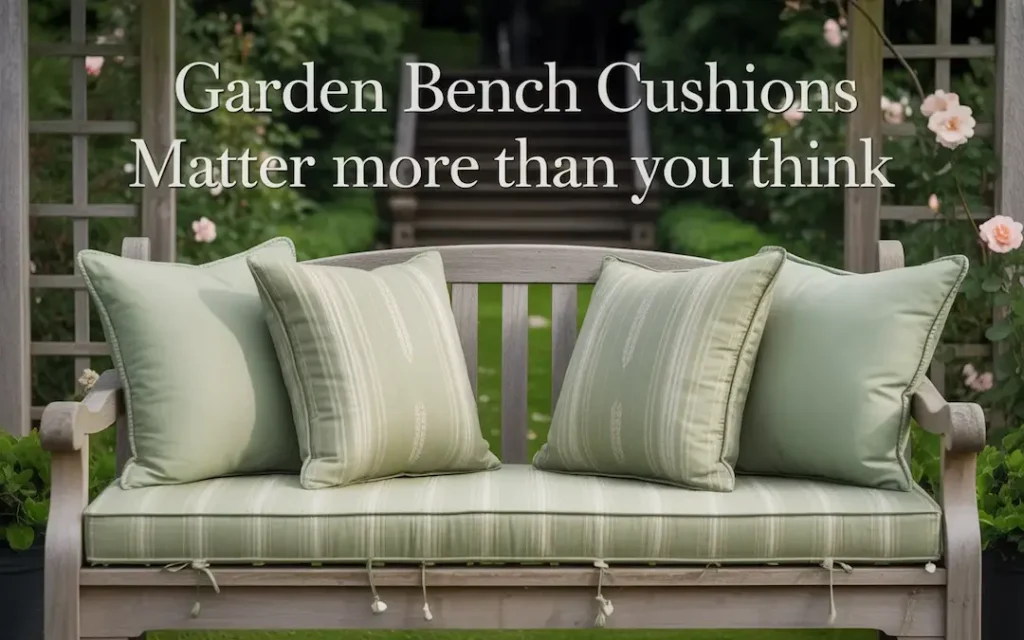
Outdoor seating rarely gets the same thought as indoor furniture. A bench gets chosen for how it looks in the garden, how well it holds up to weather, and how much it costs. Comfort comes last, if it comes at all. But a bench that nobody wants to sit on for more than five minutes isn’t doing its job, no matter how good it looks. That’s where cushions come in — and they make more of a difference than most people give them credit for.
Content
Why So Many Garden Benches Go Unused
Walk through most back gardens and you’ll find the same thing. A perfectly decent bench, sitting empty. It might be well-made, well-positioned, even well-loved in theory. But in practice, nobody sits on it for long because it’s just not comfortable enough. Hard wood or bare metal might suit the aesthetic, but they don’t suit the body — not for any meaningful stretch of time.
This happens because benches are typically bought for their appearance and durability, with comfort treated as someone else’s problem. The result is outdoor furniture that looks the part but doesn’t get used. Gardens become something people look at from inside rather than actually spend time in.
The fix is straightforward, even if it’s overlooked more often than it should be.
What a Good Cushion Actually Does
Adding cushioning to a garden bench isn’t just about making it softer. It changes how the whole space feels and functions. A bench with a well-fitted cushion becomes somewhere you want to settle in for a while. You bring your coffee out. You stay for another conversation. You read a chapter instead of a page.
That shift — from tolerable to genuinely comfortable — has a knock-on effect on how much the garden gets used overall. Comfortable seating draws people outside and keeps them there. It turns a passing pause into an actual rest. For anyone who has spent money on a garden they rarely sit in, this is worth taking seriously.
Cushions also do practical things beyond comfort. They protect bench surfaces from daily wear. They add colour and texture to an outdoor space that might otherwise feel flat. And they give the area a sense of being finished — like someone actually thought about how it would be used, not just how it would photograph.
The Problem With Most Cushions You Find in Shops
Off-the-shelf garden cushions are made to a middle ground that doesn’t really suit anyone in particular. They’re sized to fit the most common bench dimensions, which means they fit most benches badly. Too short, too narrow, prone to sliding around, quick to lose their shape. After one British summer — the rain, the occasional burst of sun, the damp — many of them look ready for the bin.
The fabric fades. The foam compresses and stays compressed. A faint smell of mildew appears that never quite goes away no matter how long you leave the cushion to air. It’s a familiar story, and it’s why a lot of people end up replacing their garden cushions every year or two and quietly resenting it.
The issue isn’t cushions in general. It’s cheap cushions made without much thought for outdoor conditions.
Why Fit and Materials Are Everything
A cushion made to fit a specific bench is a different thing entirely. It sits properly, covers the seat fully, and doesn’t shift every time someone stands up. It looks like it belongs there because it was made for that bench, not adapted from something designed for a different one.
The materials make just as much difference as the fit. Foam for outdoor use needs to dry quickly — ordinary foam holds onto moisture, and that moisture leads to mildew, odour, and a cushion that deteriorates from the inside out. High-density foam keeps its shape and support for far longer than the cheaper alternatives, which flatten within a season.
Fabric choice matters too. UV resistance isn’t a luxury feature — it’s what stops a cushion going from looking good in April to looking washed out by July. A fabric rated for outdoor use, with a water-repellent finish and enough breathability to discourage mildew, will outlast cheaper alternatives by years. The upfront cost is higher, but the cost per year of actual use works out considerably better.
What It Does for the Space
A garden with well-chosen cushions just feels different. It feels like somewhere worth being. The softness introduces a warmth that hard surfaces and structural planting can’t provide on their own. It signals, in a quiet way, that the space was put together with care.
That’s not a small thing. Gardens are expensive to maintain and often underused. Anything that makes them more inviting — more liveable — pays for itself in the enjoyment it generates.
The Bottom Line
The bench cushions are not a luxury addition or a finishing flourish. It’s what makes a garden bench worth having. Get the fit right, choose materials built for outdoors, and a bench that’s been ignored for years becomes one of the most used spots in the garden. That’s a straightforward return on a modest investment, and it’s why cushions deserve more consideration than they usually get.
Melissa Day is a dedicated home blogger who has been blogging for over six years. She covers everything home related. Melissa also loves writing posts about her travels to Europe with her husband and two children.